
Life Above the Clouds — Your Final Push to Uhuru Peak
Reaching the summit of Mount Kilimanjaro is one of the most awe-inspiring experiences a trekker can have. As the tallest peak in Africa, standing at 5,895 meters (19,341 feet), Kilimanjaro’s summit is more than just a high point on the map — it’s the emotional climax of a journey filled with effort, doubt, determination, and resilience.
For those preparing to climb, understanding what to expect at the summit is essential. It’s a moment of glory, but it’s also the most physically and mentally demanding part of the entire trek. This guide will walk you through what it feels like to ascend Kilimanjaro’s summit, what you’ll see, and how to prepare for the experience of a lifetime.
The Final Ascent: A Cold, Moonlit Climb into Thin Air
The summit push begins in darkness. Around midnight, climbers rise from their tents at Barafu Camp (or Kibo Hut, depending on the route), layering up against the bitter cold and preparing for the most challenging climb yet. The decision to begin in the early hours isn’t random — it’s carefully designed so that trekkers arrive at Uhuru Peak at sunrise, when the winds are calmer, and the views are clearest.
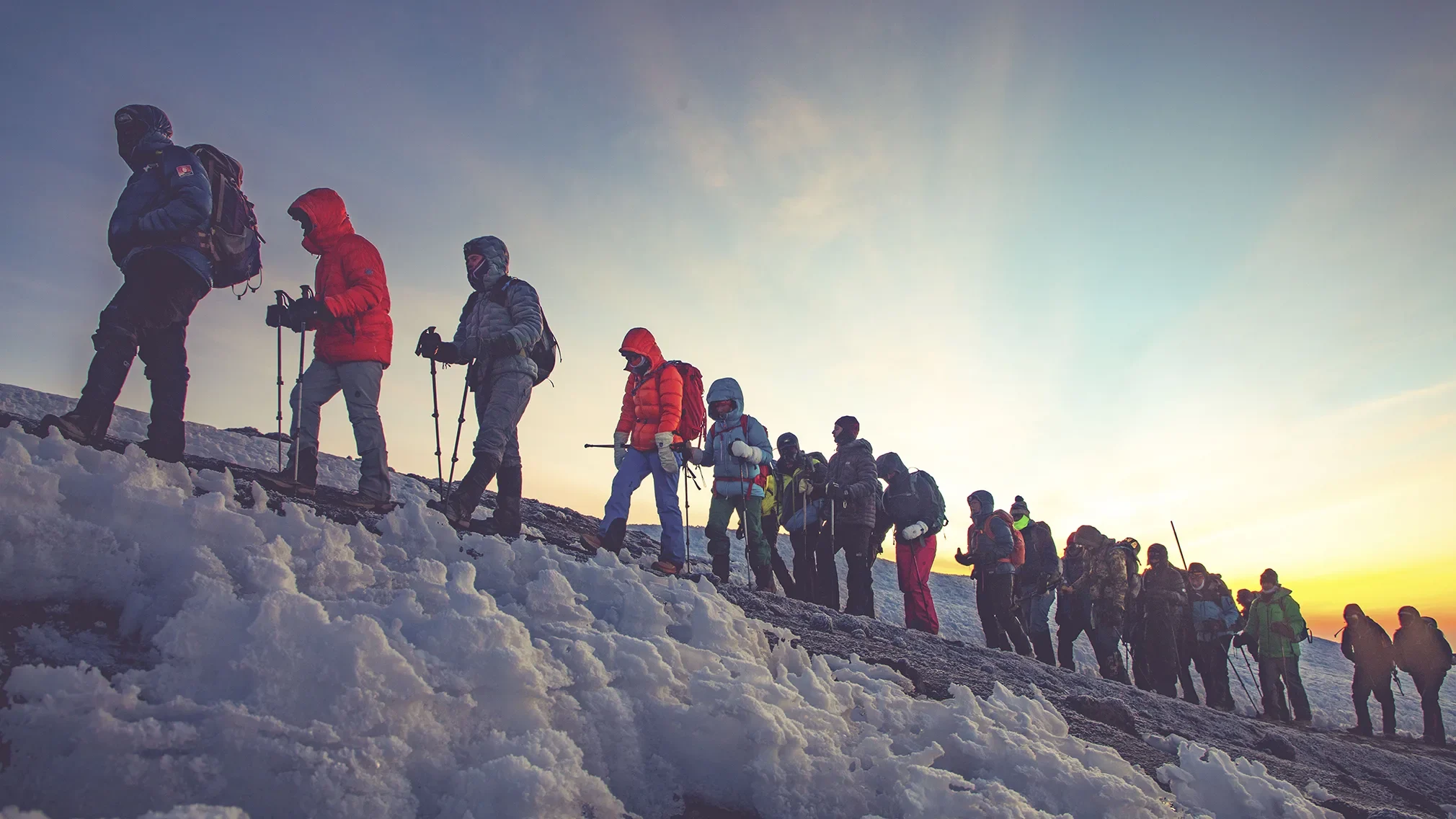
But this leg of the journey is far from easy. The air is painfully thin, the terrain is steep and unforgiving, and the cold bites through even the best gear. Each step feels heavier than the last, and the altitude makes breathing a deliberate, sometimes dizzying task. Your pace slows to a crawl — one deliberate footfall at a time.
The path zigzags through steep switchbacks, illuminated only by the soft glow of your headlamp and the silent, flickering lights of others ahead. It’s in this darkness that your mental strength is tested the most. Guides walk beside you, offering encouragement, checking your condition, and reminding you that even the hardest part is temporary.
Reaching Uhuru Peak: A Moment That Changes You
After hours of slow, determined climbing, the first milestone comes into view: Stella Point, perched along the crater rim. For many, this is where emotions start to surface. You’re already near the summit, and the promise of the peak gives you that final burst of energy.
Just a little further and you arrive at Uhuru Peak — the Roof of Africa. The iconic wooden sign appears in the cold morning light, often surrounded by tears, laughter, hugs, and disbelief. The journey has pushed you beyond your limits, and standing at the summit feels both surreal and sacred.
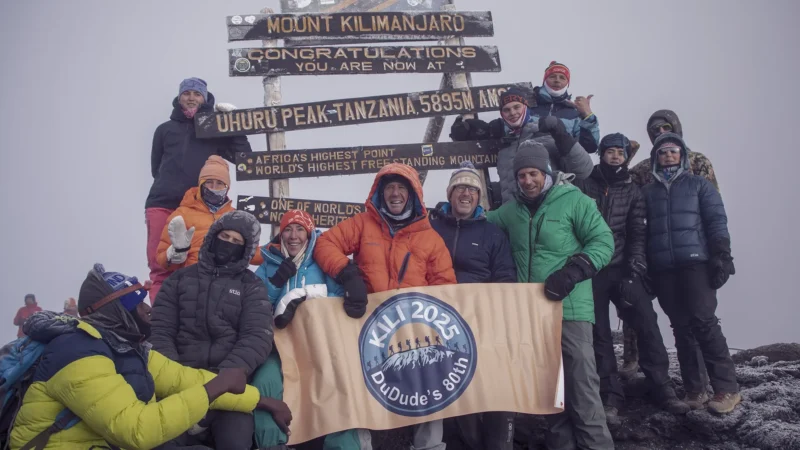
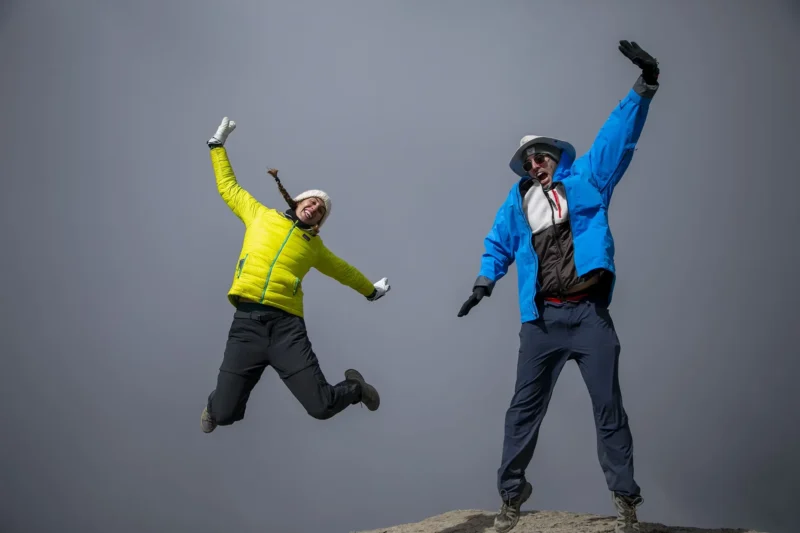
Some climbers fall to their knees. Others weep quietly. Many raise their trekking poles triumphantly, framed against a golden sky. Guides and teammates gather for photos, share congratulations, and create memories that no picture could ever fully capture. It’s more than just a high point. It’s a personal summit — a story you’ll tell for the rest of your life.
The Views from the Top: Earth from Another Planet
At the top of Kilimanjaro, the world opens in every direction. The sunrise spills across the horizon, casting golden light over the massive glaciers that shimmer like ancient relics. Below you, the vast plains of Tanzania stretch endlessly into the morning haze.
The sky is crisp and piercingly blue. The glaciers of Kilimanjaro, though smaller than decades ago, are still imposing — silent reminders of the mountain’s ancient past. You’re literally standing above the clouds, and the sense of stillness and isolation is unlike anything else on Earth.
It’s a breathtaking contrast: a frozen summit above tropical Africa. And for a few short minutes, you’re not a tourist, a climber, or even a person burdened by the world below — you are simply present, soaking in the vast silence and beauty that surrounds you.
The Realities of High Altitude: Beauty Meets Brutality
But the summit, as beautiful as it is, comes with serious challenges. At this altitude, oxygen levels are roughly 50% of what they are at sea level. Breathing becomes difficult. Even standing still requires effort. Climbers may experience dizziness, headaches, nausea, and other symptoms of acute mountain sickness (AMS).
To prevent complications, guides typically limit time at the summit to 5–15 minutes. Photos are taken quickly. Celebrations are brief. Your body is in a state of stress, and staying too long at the top can be dangerous. Even the fittest climbers must descend promptly to avoid worsening symptoms.
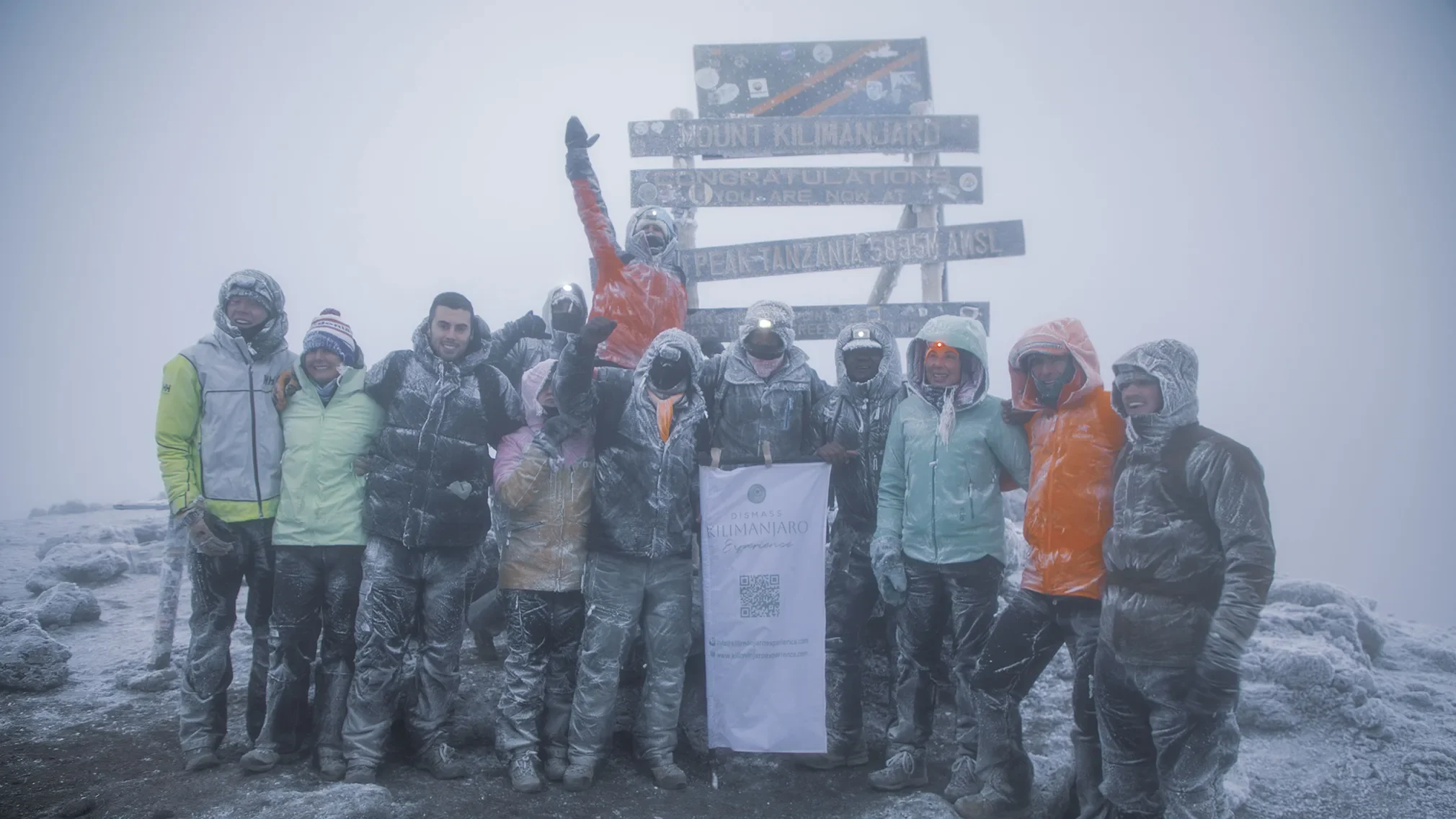
The cold is also extreme. Temperatures can plunge well below freezing, and the wind chill can make it feel even colder. Frostbite, dehydration, and confusion are real risks. That’s why preparation, proper gear, and a reliable guide team are absolutely essential to making the summit both safe and meaningful.
The Descent: Gravity’s Challenge
Descending from the summit isn’t as easy as it sounds. In fact, many climbers find it more difficult than expected. The trail is steep, often covered in loose volcanic scree that shifts beneath your feet, demanding balance and control.
By this point, adrenaline is fading, and fatigue begins to set in. The knees take a beating, and every step downward feels like a small battle. Yet, with each meter you descend, the air grows richer in oxygen, and your body begins to recover.
Returning to base camp brings a wave of relief. You’ve completed the hardest part. After a meal and some much-needed rest, the enormity of what you’ve achieved slowly begins to settle in.
Final Reflections: The Summit Experience Stays With You Forever
Climbing Kilimanjaro is not just about getting to the top — it’s about who you become along the way. The summit is a moment you’ll never forget, not because of the altitude, the sign, or the sunrise alone — but because of everything it took to get there.
It’s the midnight start, the silent struggle, the frozen tears, and the quiet determination. It’s the bond with your guides, the stories told by headlamp, and the pride that stays with you long after the descent. The Kilimanjaro summit experience is both brutal and beautiful — and entirely worth it.
[See Kilimanjaro VIP Packages | Kilimanjaro VIP+ Packages | Mt Kilimanjaro Climbing Routes]


